 Plumber
 Bullhead City, AZ
Leak Detection in Bullhead City, AZ
Acoustic, pressure and thermal methods that find hidden leaks without tearing the house apart looking for them.
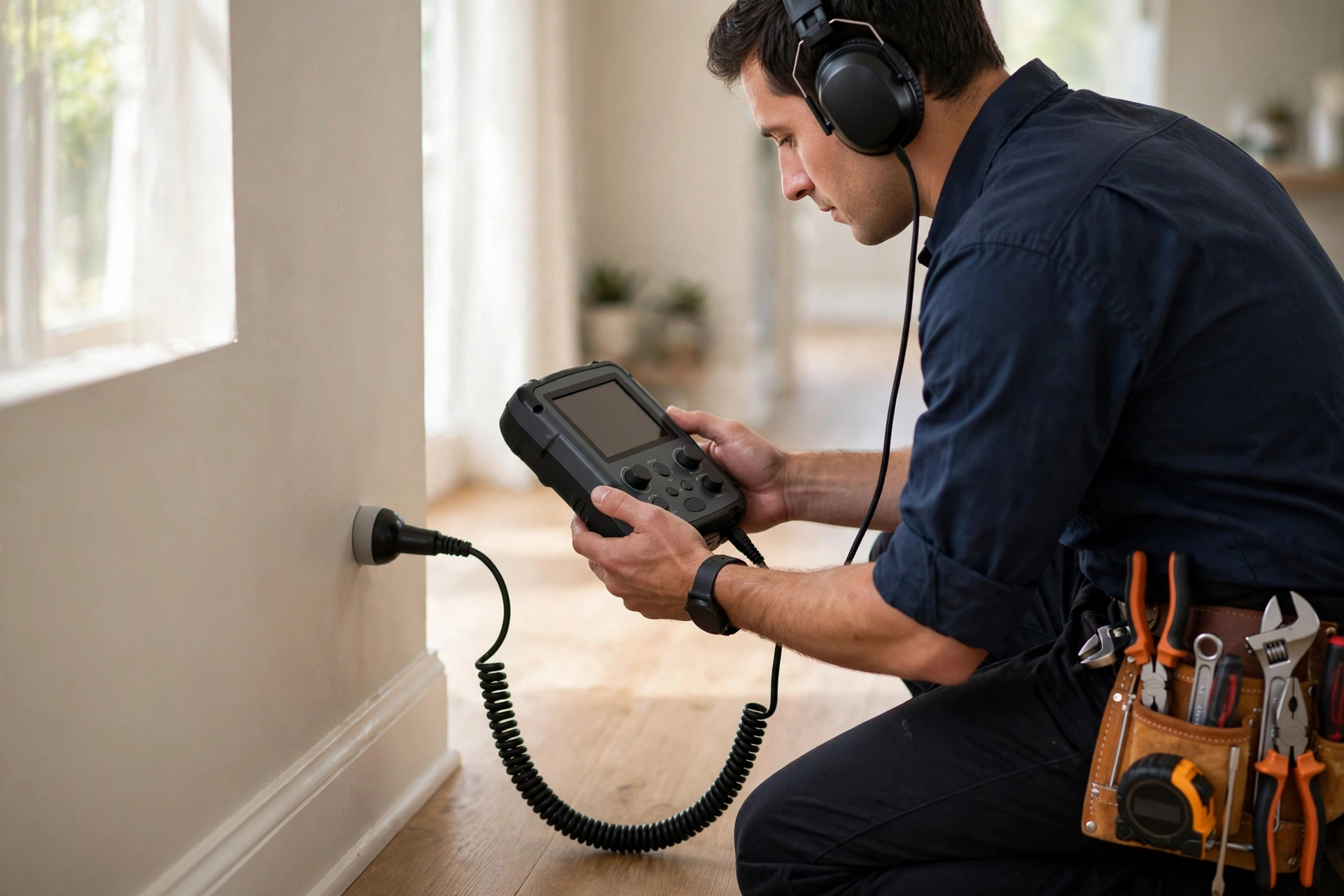
Leak detection in Bullhead City answers one expensive question: where, exactly, is the water escaping? A meter that spins with every tap off, a water bill that doubled while a home sat empty, a warm patch on a slab floor in Desert Foothills Estates — each says water is leaving the system somewhere, and guessing wrong means opening floors, walls or concrete in the wrong place.
Modern detection is non-invasive first: isolation testing, acoustic listening, pressure work and thermal imaging narrow the leak to a small area before anything is opened. This page explains the methods, the signs that you need them, and how detection connects to repair — including the slab-leak and vacant-home patterns that define Bullhead City leak work.
For pricing context before anything else, the Bullhead City cost page publishes the market ranges leak detection sits inside — starting with leak repair, straightforward (market range): About $94–$283. And if your symptom is broader than leak detection, the Bullhead City plumbers homepage routes every common symptom to the right service.
What leak detection covers in Bullhead City
A detection visit separates the system into zones — meter to house, hot versus cold, irrigation versus interior — and tests each one so the search area shrinks logically instead of randomly. Acoustic equipment listens for the hiss and vibration of pressurised water escaping; the sound is distinctive and, in quiet desert homes, remarkably locatable. Thermal cameras reveal the temperature signature of hot-water leaks under tile and concrete, and moisture metering confirms how far water has travelled from the source.
The local caseload is dominated by three patterns. Slab leaks in the many concrete-floor homes across Sunridge Estates, Arroyo Vista and the newer subdivisions. Vacancy leaks that ran undetected in seasonal homes — the city itself warns returning residents about standing-water and leak issues after long absences. And manufactured-home leaks in the belly space, where a small drip soaks insulation for months before it shows as a soft floor. Each pattern has a different detection route, which is why the first questions on the call are about housing type and history.
Warning signs you need this service
- The water meter dial moving while no water is being used
- A bill jump with no change in household use — or a bill for an empty house
- Warm, damp or lifting flooring in one area
- The sound of running water when the house is quiet and taps are off
- Low pressure on the hot side only, or a water heater that runs constantly
- Mould or musty smells at skirting boards with no visible source
- A soft or spongy floor patch in a manufactured home
- Wet soil, pooling or unusually lush growth along the water line's path
What causes it here
Detection finds leaks; the causes it uncovers in Bullhead City repeat themselves: pinhole corrosion in copper attacked from inside by mineral-heavy groundwater, scale-stressed joints that finally weep under pressure, poly piping in manufactured homes embrittled by heat cycles, slab lines abraded where they pass through concrete, and fittings disturbed by ground movement or earlier repairs. Knowing the cause matters because it decides whether a spot repair is sensible or the line should be rerouted before it fails again two feet further along.
How the work is done
The standard sequence: confirm the leak exists with a meter test, isolate it to a zone, then pinpoint it acoustically or thermally. Only then is any opening made — a single tile, a small concrete core, a section of skirting — at the confirmed location. After repair, the zone is re-tested to prove the system is tight, because one ageing line can hold two leaks and fixing the loud one alone leaves the quiet one billing you.
In depth — what experience teaches about this job here
Detection is a logic exercise before it is a technology exercise. The meter test proves water is leaving. The zone tests — closing the heater feed, isolating irrigation, separating hot from cold — prove which system is losing it. Only then do the instruments earn their keep, because an acoustic sensor pointed at the wrong third of a house finds nothing but confidence. Experienced detection work in Bullhead City therefore sounds unhurried: questions about bills, vacancy and housing type first, headphones second. The questions are the method; the equipment confirms what the logic has already narrowed.
Owners can help more than they expect. The single most useful evidence is a simple log: the meter reading in the morning and evening across two days of normal use, and one reading pair across a no-use stretch. That pattern distinguishes a constant leak from an intermittent one — a toilet that leaks only after certain flushes, an irrigation fault — and intermittent faults are the ones that eat detection time. Bring the log, and a detection visit that might have taken a morning often takes an hour.
How your housing type changes the job
Slab-built homes. Slab detection leans on thermal imaging: the hot line's signature through tile or concrete is the fastest route to the pinpoint in slab construction.
Manufactured homes. In manufactured homes, detection adds the belly inspection — moisture mapping from below separates a belly-line leak from an in-home one before either is opened.
Seasonal homes. Vacancy leaks are detection's home ground: the meter evidence plus a whole-system zone test finds what ran, and for how long, in a single visit.
- Do the meter test yourself: note the reading, avoid water for two hours, and re-check — movement means a leak
- Check the water heater's pan, T&P valve and supply connections for drips
- Look under every sink and behind toilets with a dry tissue — it shows moisture your hand misses
- Photograph the meter and the suspect area before the visit; history helps the technician
- If the home was empty for a season, walk it slowly on return listening for running water before unpacking
The visit, step by step
Call with the symptom — bill, meter, floor, sound — and your housing type
Meter and zone isolation tests confirm the leak and narrow the zone
Acoustic or thermal pinpointing marks the source before anything is opened
Repair options are explained: spot repair, section replacement, or reroute
The system is re-tested after repair so 'fixed' is proven, not assumed
What it costs — market ranges
| Item | Range / basis |
|---|---|
| Leak repair, straightforward (market range) | About $94–$283 |
| Slab-leak repair | Quoted after pinpointing; access drives the figure — see the slab leak page |
| Detection visit | Priced by scope and zones tested; credited thinking applies — it replaces guesswork demolition |
| Reroute around a failed line | Quoted per run; often cheaper than repeated slab openings |
Ranges above draw on the published Bullhead City market data collected on our cost page. Your figure is set after the job is seen, and explained against those ranges.
A suspected leak with water actively surfacing, a ceiling bulging, or a meter spinning fast is same-day urgent. A slow, stable suspicion — a modest bill creep, a faint warm spot — is a prompt scheduled detection visit; either way, do not wait a season, because water damage compounds quietly.
Leak Detection FAQs
How much does leak detection cost in Bullhead City?
Detection is priced by the scope of testing — a single-zone confirmation costs less than a whole-property slab-and-manufactured-home search. Set against the alternative it is the cheap option: published market ranges put even a straightforward leak repair around $94–$283, and opening the wrong section of slab or floor to hunt by guesswork costs more than the test that prevents it.
Can you find a leak without breaking up my floor?
In most cases the leak is pinpointed first using acoustic and thermal methods, so any opening is small and exactly placed. Completely trenchless certainty is not always possible — some confirmations need a small core or tile lift — but 'detect first, open once' is the working rule, and you approve the opening before it happens.
My bill doubled while the house was empty. Where do I start?
With the meter test and a zone isolation. Empty-home Bullhead City leaks commonly come from a slab line, a water-heater fault, or a manufactured-home belly line that ran for weeks. Because the city advises flushing standing water on return, combine the leak check with a full flush and a water-heater inspection before the season starts.
Does a warm spot on the floor always mean a slab leak?
Not always — sun-heated tile in a desert summer can fool you — but a warm patch that persists overnight, especially with a meter that moves or a heater that cycles, is the classic hot-line slab-leak signature. Detection distinguishes the two quickly, which is better than either ignoring it or breaking concrete on a hunch.
What is a pinhole leak and why does Bullhead City get them?
A pinhole is a tiny corrosion perforation in copper pipe. Mineral-heavy groundwater, high water temperature and water chemistry attack copper from inside over years, and desert homes that run hot water frequently show pinholes sooner. One pinhole in old copper usually means the run is thinning generally — detection plus an honest conversation about repiping beats a chain of spot repairs.
Will detection tell me if I should repair or reroute?
Yes — that judgement is the point of the visit. A sound line with one failed joint suits a spot repair. A slab line with corrosion along its length, or copper showing multiple pinholes, usually makes a reroute through walls or attic the smarter spend. You will see the evidence the recommendation rests on.
The evidence trail: how a suspicion becomes a location
Good leak detection is closer to detective work than to demolition, and it starts with evidence you can gather yourself. The water bill is the first witness: compare the same months across years, because Bullhead City's billed groundwater makes a slow leak a monthly charge you can watch growing. The meter is the second witness. With every tap closed and no appliance running, a meter that still creeps is passing water somewhere, and noting how fast it moves helps separate a toilet flapper's seep from a pressurised line's steady loss. Warm flooring, a musty cabinet, paint that bubbles low on a wall, or the sound of water in a silent house each narrow the search further before any instrument comes out of the case.
Inside the walls versus under the floor
Where a leak hides decides both the method and the mess. Leaks inside wall cavities usually betray themselves through staining, swelling baseboards or a soft patch of drywall, and they can often be reached through a modest opening at the back of a cabinet or closet. Under-slab leaks stay invisible longer, surfacing as warm spots, lifting flooring or a meter that never rests, and they demand pinpointing before anyone cuts concrete — the difference between a single careful opening and a trench across a room is the quality of the detection that came first. Manufactured homes write a third version of the story, with leaks dripping into the belly and showing up as sagging insulation or a soft floor rather than any wall sign at all.
What a detection visit should hand you
You should finish a detection visit with more than a wet finger pointed at a wall. Expect a located point or a tightly bounded zone, an explanation of which evidence converged there, a statement of what the repair options are — spot repair, reroute, or monitoring for a trivial seep — and figures for each, set against the ranges on the Bullhead City cost page. If the finding is that no active leak exists and the bill spike came from irrigation or a toilet that has since been fixed, that is a successful visit too, and it should be reported with the same confidence as a found leak, not talked around.
- Photograph your meter reading at night and again in the morning; overnight movement with no use is strong evidence.
- Bring the last three water bills to the conversation — the trend often dates the leak's beginning.
- Check toilet tanks with food colouring before booking; a silently running toilet is the most common false alarm and the cheapest fix.
- Do not ignore a single warm tile or a faint hissing at a wall; both are early, inexpensive stages of the same problem.
- Ask for the located point to be marked and photographed so any later repair — by anyone — starts from evidence, not memory.
Detection priced by scope is money spent replacing guesswork with a map. To start that map for your home, call (928) 693-1910 and describe what you have noticed; the odd details — the bill, the warm spot, the quiet-house sound — are exactly what a good detection visit is built from.
After the leak is found: closing the loop
Detection ends with a location, but the value completes itself in what happens next: a repair priced from a known point, a re-test after that repair to confirm the system holds, and a follow-up meter check that proves the loss has stopped rather than merely moved. Keep the detection notes with your home records. A future bill spike then starts from evidence — you will know which lines were proven sound and when — instead of from the same blank suspicion that made the first visit necessary.
Related services and areas
Homeowners dealing with this often also need emergency plumber · drain cleaning · hydro jetting · slab leak repair · water heater repair — and local help from a plumber in Bullhead City who knows the housing on your street. Neighbourhood pages: Riviera · Riverview Park · Laughlin Ranch · Fox Creek · Sunridge Estates · Buena Vista · Holiday Shores · Holiday Highlands · Desert Foothills Estates · Arroyo Vista · Bullhead City Center · Playa del Rio · Rio Lomas · Hancock Road Corridor. Town pages cover Fort Mohave, Mohave Valley and Laughlin, NV.
Leak Detection by neighbourhood
Neighbourhood-level pages pair this service with each area's housing and conditions: Leak Detection in Riviera · Leak Detection in Riverview Park · Leak Detection in Laughlin Ranch · Leak Detection in Fox Creek · Leak Detection in Sunridge Estates · Leak Detection in Buena Vista · Leak Detection in Holiday Shores · Leak Detection in Holiday Highlands · Leak Detection in Desert Foothills Estates · Leak Detection in Arroyo Vista · Leak Detection in Bullhead City Center · Leak Detection in Playa del Rio · Leak Detection in Rio Lomas · Leak Detection in Hancock Road Corridor.
Talk to a Bullhead City plumber today
One call, a real conversation about your job, and an honest next step.
(928) 693-1910Call (928) 693-1910