 Plumber
 Bullhead City, AZ
Septic Tank Pumping in Bullhead City, AZ
Pumping, inspection and honest advice for Bullhead City's septic homes — including the riverfront pockets where septic still serves whole streets.
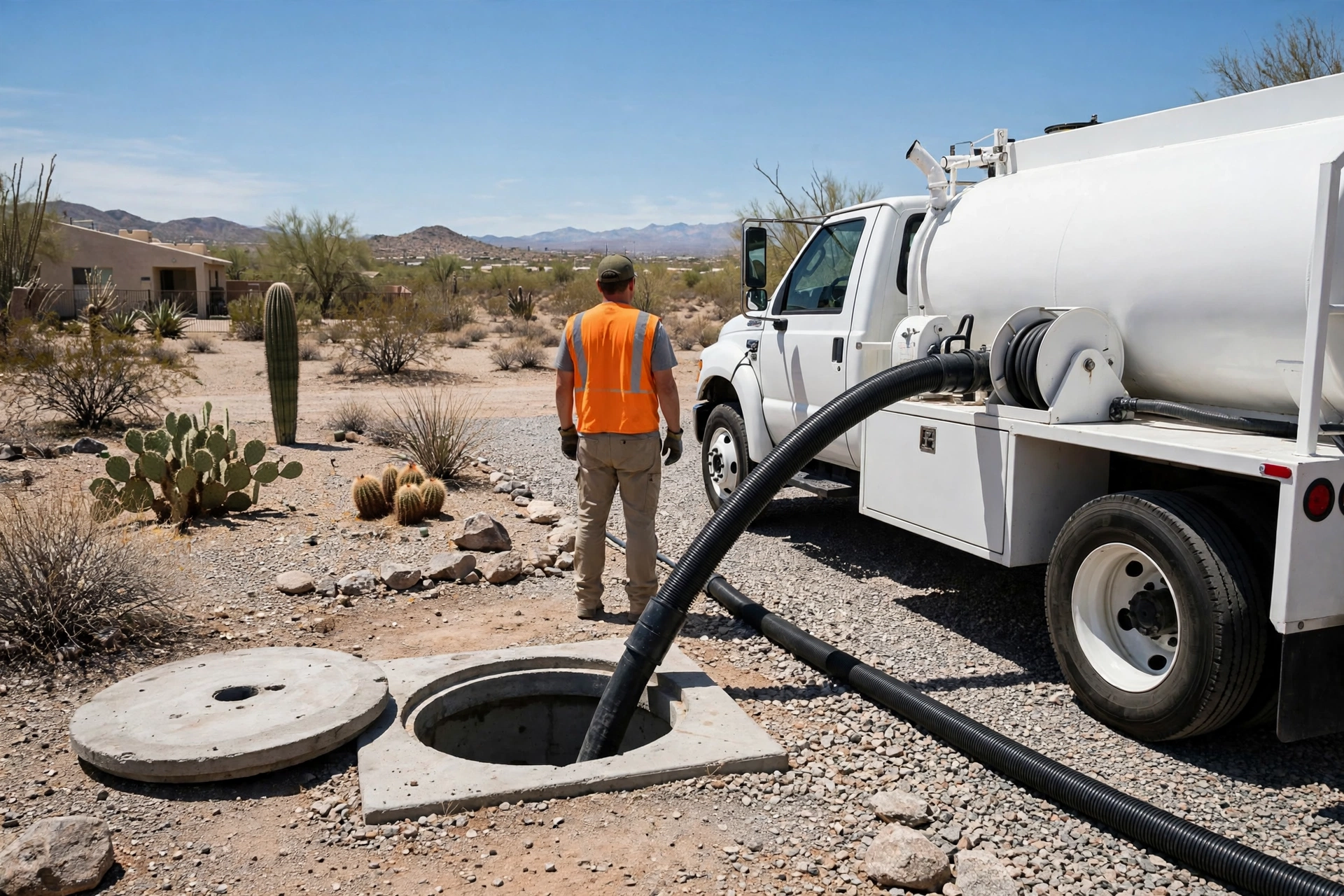
Septic tank pumping in Bullhead City serves the pockets of the city that city sewer never reached — including parts of Playa del Rio, where a 1960 manufactured home on septic can sit streets away from modern riverfront builds, along with rural-fringe homes toward Mohave Valley. A septic system is a small treatment plant buried in the yard, and pumping is its essential maintenance: solids that do not break down must come out before they escape into the drain field.
This page explains how a septic system works, the pumping interval and what sets it, the warning signs that pumping is overdue or that something else is wrong, and how septic symptoms are distinguished from ordinary sewer-line problems.
For pricing context before anything else, the Bullhead City cost page publishes the market ranges septic tank pumping sits inside — starting with drain clearing, if the fault proves to be the line (market range): About $63–$315. And if your symptom is broader than septic tank pumping, the Bullhead City plumbers homepage routes every common symptom to the right service.
What septic tank pumping covers in Bullhead City
A septic tank separates wastewater into scum, liquid and sludge layers; the liquid flows to a drain field where soil finishes the treatment. Bacteria break down much of the organic load, but the inert solids — sludge — accumulate steadily. Pumping removes sludge and scum before the layers grow deep enough to push solids into the field, where they clog the soil and turn a maintenance bill into a field-replacement bill.
Bullhead City conditions shape septic care: desert soils and caliche layers drain differently from textbook loam, riverfront properties sit closer to the water table, and seasonal homes load their systems in intense bursts — a winter of guests after months of rest. Oversized water use matters too: a running toilet or a slab leak feeding a septic system around the clock can hydraulically overload a field that was sized for a quiet household.
Warning signs you need this service
- Drains slowing across the whole house with no sewer-line explanation
- Gurgling, or sewage odours inside or near the tank and field
- Lush, green or spongy ground over the drain field — especially in dry months
- Standing water or effluent surfacing in the yard
- Backups into the lowest fixtures during heavy water use
- It has been more than three to five years since the last pumping
- Alarms or high-water indicators on systems fitted with them
- A property sale or purchase with no septic service records
What causes it here
Time and load are the causes of a full tank: every household fills sludge at a rate set by occupants, garbage-disposal use and water volume. Beyond fullness, failures come from solids escaping a neglected tank into the field, from root intrusion in field lines, from hydraulic overload — often a plumbing leak elsewhere in the home quietly sending hundreds of extra gallons a day — and from systems sized for a smaller household than the winter guest season now brings.
How the work is done
A pumping visit locates and opens the tank lids, pumps the full contents — not just the liquid middle — and inspects what the empty tank reveals: baffle condition, cracks, root entry, and the sludge history written on the walls. The field's behaviour is assessed from the home's symptoms and the yard. Where symptoms suggest a line problem instead, camera inspection of the house line distinguishes tank, line and field faults so money is not spent pumping a tank that was never the problem.
In depth — what experience teaches about this job here
A septic system keeps its own ledger, and pumping day is when it is read. The sludge and scum depths measured before pumping record the household's real production since the last visit — the truest basis for setting the next interval, better than any calendar rule. A system filling faster than its household size predicts is telling a story: a running toilet feeding it around the clock, a leaking line adding groundwater, guests beyond its design. Contractors who report those depths, and owners who write them down, turn pumping from a chore into the system's health record.
The drain field is the expensive half of the system and the half that cannot be pumped back to health. Everything in septic care is organised around protecting it: keeping solids in the tank where pumping can reach them, spreading water load so the field rests between doses, keeping vehicles and construction off its soil. In Playa del Rio and the valley's septic pockets, where fields sit in desert soils near prized riverfront land, that protection is the difference between a maintenance relationship and a replacement excavation — in money, in mess, and in the yard you have to live with afterwards.
How your housing type changes the job
Slab-built homes. Slab homes on septic — found in the city's older pockets — pair a hidden-line house with a buried system, making records and scheduled inspection doubly valuable.
Manufactured homes. Manufactured homes are a large share of local septic users, including the documented septic-served stock in Playa del Rio; their pumping access and lid layout are routine work here.
Seasonal homes. Seasonal septic homes should pump on measured sludge, not calendar years, because their load arrives in intense occupied bursts between long rests.
- Keep a service record: dates pumped and the contractor's notes on sludge depth
- Spread laundry across the week rather than a single heavy day
- Fix running toilets and dripping fixtures promptly — they load the field around the clock
- Keep vehicles, sheds and new landscaping off the drain field
- Never plant trees or deep-rooted shrubs over the tank or field lines
The visit, step by step
Call with your symptoms and the last known pumping date
The tank is located and opened; contents and condition are assessed
Full pumping is completed and the tank's internals are inspected
Line or field concerns are separated from tank fullness with the right tests
You get a realistic next-pumping interval for your household's actual use
What it costs — market ranges
| Item | Range / basis |
|---|---|
| Drain clearing, if the fault proves to be the line (market range) | About $63–$315 |
| Septic pumping | Quoted by tank size, access and lid depth |
| Tank inspection during pumping | Included in a proper pumping visit — the empty tank is the inspection opportunity |
| Drain field repair or replacement | Quoted after assessment; the outcome regular pumping exists to prevent |
Ranges above draw on the published Bullhead City market data collected on our cost page. Your figure is set after the job is seen, and explained against those ranges.
Sewage backing up into the home from a full or failed system is urgent — cut water use to the minimum and call the same day. Routine pumping on schedule is planned maintenance and should never need to become that call.
Septic Tank Pumping FAQs
How often should a septic tank be pumped in Bullhead City?
Most households land on a three-to-five-year interval, set by tank size, occupant count and water use. Seasonal homes stretch the calendar but concentrate the load when occupied. The sludge depth measured at each pumping is the real guide — a good contractor records it and sets your next interval from evidence, not habit.
What are the signs my septic tank is full rather than broken?
Whole-house slow drains, gurgling, odours near the tank, and a lush patch over the field point to fullness or field saturation. Surfacing effluent or backups during laundry are stronger signals. Pumping answers the fullness question and the empty-tank inspection then reveals whether anything is actually broken — the two are routinely confused.
Can a plumbing leak damage my septic system?
Yes — a running toilet or an undetected slab leak can send hundreds of gallons a day into a system sized for a fraction of that, hydraulically overloading the drain field until it fails to absorb. Septic owners have extra reason to fix leaks promptly and to do the meter test: the field is downstream of every plumbing fault in the house.
My home is in Playa del Rio. How do I know if I am on septic or sewer?
Playa del Rio is genuinely mixed — older homes, including a documented 1960 manufactured home, sit on septic while newer riverfront builds may be on sewer. Your water bill, the presence of a tank lid or clean-outs in the yard, and county records all help; a service visit can confirm it. It matters because diagnosis routes differ completely between the two.
What should I never put into a septic system?
Wipes of any kind (including 'flushable' ones), grease in quantity, chemical drain openers as a habit, and garbage-disposal loads beyond the system's sizing all shorten the tank's and field's life. The system is a biological treatment process: treat it like one and it serves for decades.
Does a septic system need inspection when buying a Bullhead City home?
Strongly recommended, especially in the septic pockets where records are thin. A pre-purchase pumping and inspection reveals the tank's condition, the field's behaviour and the maintenance history you are inheriting — far cheaper to learn before completion than in your first winter of guests.
Life between pumpings: the habits that decide a system's lifespan
A septic system on the outskirts of Bullhead City, Fort Mohave or Mohave Valley is less a tank than a small, living treatment works, and what happens between professional visits decides how long it serves. The tank's bacteria need steadiness: a household that spreads laundry across the week treats its system far kinder than one that sends seven loads through on a single morning, overwhelming the tank's ability to settle solids before they reach the field. Guest surges deserve the same respect — a river weekend that triples a home's occupancy triples its hydraulic load, and systems near their pumping date often choose exactly that weekend to object. None of this requires delicacy, only rhythm: water that arrives gradually is water the system can process.
What should never go down the drain of a septic home
The forbidden list matters more on septic than on any city sewer, because everything you send down arrives at your own treatment works and your own field. Grease is the chief offender, coating tank surfaces and clogging field soil in ways no pumping can reverse. So-called flushable wipes are the second: they do not break down on a septic timescale and they accumulate exactly where flow should be freest. Harsh chemical drain openers and heavy antibacterial regimes can blunt the bacterial action the tank depends on, and a garbage disposal used as a general food route loads the tank with solids that shorten the interval between pumpings. The septic-safe habit is simple to state and occasionally inconvenient to keep: only water, waste and septic-safe paper belong in the system.
The drain field: quiet ground that must stay quiet
The field does the final treatment, which makes the ground above it working infrastructure rather than spare yard. Vehicles parked or driven over it compact the soil and can crush distribution lines; trees planted over it send roots toward its moisture; and building anything — a shed, a patio, an RV pad — across it converts a maintainable system into an excavation project. Healthy field ground looks unremarkable: grass growing evenly, no persistent wet patches, no odour on still, warm days. The warning signs are equally plain once known — lush strips that outgrow the surrounding desert planting, soggy areas that never dry, or gurgling inside the house after heavy use — and each deserves assessment while the remedy is still maintenance rather than reconstruction.
- Keep a pumping record with dates and tank condition notes; the interval your household actually needs is written in that history.
- Spread laundry and dishwasher loads across the week instead of concentrating them into one heavy water day.
- Mark your tank lids and field boundaries on a simple property sketch kept with the home's documents.
- Never park, pave or plant trees over the field, however tempting the flat, open ground appears.
- Divert roof and surface drainage away from the field; storm water is load the system was never sized to treat.
Pumping is quoted by tank size, access and lid depth, with the related market ranges on the Bullhead City cost page. Call (928) 693-1910 with your last pumping date if you know it — or the honest admission that nobody does, which is itself useful information — and the visit can be planned around your system's real history.
New to septic? The first-year owner's guide in brief
Buyers arriving from city-sewer streets sometimes treat a septic system as a private version of the same thing, and the first year teaches the differences — occasionally at invoice level. Learn your tank's size and location from the seller or the property records, because every pumping quote and interval calculation starts there. Learn which drains in the home actually feed the tank; exterior and laundry arrangements vary on rural-edge properties. Keep the system's paperwork — permits, past pumping receipts, any field repairs — in the home's document file rather than losing it between owners. And treat the first pumping as an inspection opportunity even if it comes early: seeing your own empty tank, its baffles and its condition, is the fastest education a new septic owner can buy.
Effluent filters and other small parts with large jobs
Many systems carry an effluent filter at the tank's outlet, a modest screen with an outsized responsibility: it stops solids that escaped settling from reaching the field, where they would clog soil pores that no service can reopen. The filter needs periodic cleaning — often combined with pumping visits — and a clogged one can mimic far more serious symptoms, slowing drains throughout the house. If your system has one, its cleaning belongs in your maintenance record alongside pumping dates; if it does not, the pumping visit is the right moment to ask whether fitting one suits your tank's design.
Related services and areas
Homeowners dealing with this often also need emergency plumber · drain cleaning · hydro jetting · leak detection · slab leak repair — and local help from a plumber in Bullhead City who knows the housing on your street. Neighbourhood pages: Riviera · Riverview Park · Laughlin Ranch · Fox Creek · Sunridge Estates · Buena Vista · Holiday Shores · Holiday Highlands · Desert Foothills Estates · Arroyo Vista · Bullhead City Center · Playa del Rio · Rio Lomas · Hancock Road Corridor. Town pages cover Fort Mohave, Mohave Valley and Laughlin, NV.
Talk to a Bullhead City plumber today
One call, a real conversation about your job, and an honest next step.
(928) 693-1910Call (928) 693-1910