 Plumber
 Bullhead City, AZ
Water Softeners in Bullhead City, AZ
Softeners and filtration sized for Bullhead City groundwater — protecting heaters, fixtures and appliances from the scale that shortens their lives.
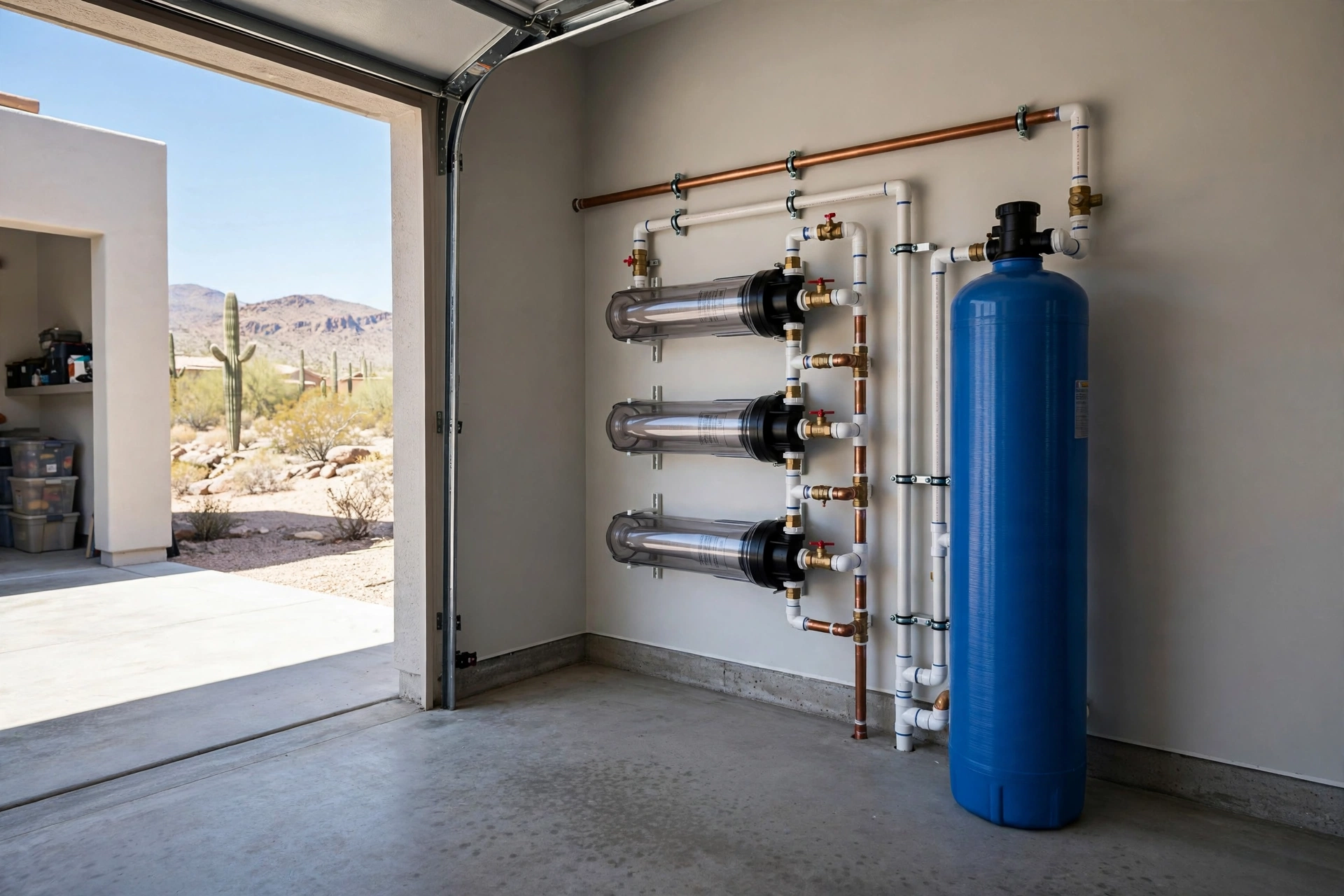
Water softener and filtration work in Bullhead City starts from a sourced fact: the city supply is groundwater, pumped from wells — not river water — and it arrives hard, carrying the calcium and magnesium that scale water heaters, stiffen faucet cartridges, spot glassware and shorten appliance life across this city. Nearly every other page on this site mentions hard water as a cause; this page is about treating it.
One honesty note before anything is sold: Bullhead City's published water quality reports do not state a hardness figure, so no specific grains or ppm number is quoted here. Sizing a softener properly starts with a hardness test of your home's water — a simple test that should precede any equipment recommendation.
For pricing context before anything else, the Bullhead City cost page publishes the market ranges water softener & filtration sits inside — starting with softener supply and install: Quoted after hardness test and sizing; loop-ready homes install cheaper. And if your symptom is broader than water softener & filtration, the Bullhead City plumbers homepage routes every common symptom to the right service.
What water softener & filtration covers in Bullhead City
A water softener removes calcium and magnesium by ion exchange, swapping them for sodium or potassium so the water no longer forms scale. Filtration is a separate job: sediment filters catch the grit that jams fill valves and aerators, and carbon filtration improves taste and odour. Many Bullhead City homes want both — softening for the whole house, filtration at the system entry or the kitchen tap.
Sizing depends on measured hardness, household size and peak flow — an undersized softener regenerates constantly and still lets hard water through at peak use; an oversized one wastes salt and water. Placement matters locally too: garage installations must tolerate extreme summer heat, loop plumbing (whether the home was pre-plumbed with a softener loop) decides install complexity, and outdoor and irrigation lines are normally kept on hard water so plants and the pool are unaffected.
Warning signs you need this service
- White scale crusting on faucets, showerheads and kettle elements
- A water heater that rumbles with sediment years before it should
- Soap and shampoo that will not lather, and glassware that spots despite rinsing aids
- Stiff, gritty faucet handles and cartridges failing early
- Laundry that greys and roughens faster than expected
- Dry skin and hair complaints that track with the water, not the weather
- Appliance — dishwasher, washer, ice maker — scale failures repeating
- A home where every plumbing repair conversation ends with the words 'hard water'
What causes it here
The cause is geology: groundwater moving through mineral-bearing formations around the Mohave Valley picks up calcium and magnesium before the city's wells pump it to your tap. Nothing is wrong with the water's safety — hardness is an aesthetic and equipment problem, not a contamination one — but its effect on a home's plumbing accumulates every single day the water runs untreated.
How the work is done
The correct sequence is test, then size, then install. A hardness test at the home sets the number the equipment is sized against. The softener is installed on the home's loop or at the entry with a bypass, a drain for regeneration, and brine tank placement that respects garage heat. Filtration stages are matched to the actual complaint — sediment, taste, or both. After installation the treated water is re-tested at a tap so the result is verified, and regeneration settings are matched to the household's real usage rather than left at factory defaults.
In depth — what experience teaches about this job here
The softener conversation goes wrong when it starts with equipment. It goes right when it starts with evidence: a hardness test at the home, a look at the heater's sediment history, the state of the cartridges the water has eaten. Those three facts size the system, place it, and set honest expectations — soft water will stop new scale forming; it will not dissolve a decade of existing build-up out of a furred drain, and any seller implying otherwise is selling. Existing scale in heaters is flushed; in fixtures it is cleaned or the cartridge replaced; the softener's job is to make those the last times.
Placement and settings repay the same care. A softener regenerating on factory defaults in a two-person Bullhead City home wastes salt and water; matched to tested hardness and real consumption, regeneration becomes a minor utility cost instead of a mystery line. Garage heat argues for shaded placement and a brine line routed with care. And the bypass — the valve that returns the home to hard water during service — should be shown to the owner, operated once, and labelled, because the day it is needed is never the day anyone wants to learn it.
How your housing type changes the job
Slab-built homes. Slab homes protect everything at once with treatment: no under-slab access exists for second chances, so preventing scale beats every alternative.
Manufactured homes. Manufactured installations plan for the home's loop and space honestly, with compact units and belly-aware routing where the entry requires it.
Seasonal homes. Seasonal homes should set regeneration for occupancy, not for the calendar — a softener serving an empty house all summer is salt spent on nobody.
- Test your water before shopping — a hardness strip test gives a working figure in minutes
- Keep a note of which fixtures scale fastest; the pattern shows where treatment pays first
- Ask whether your home has a pre-plumbed softener loop — it changes install cost significantly
- Decide the drinking-water question: many households add a kitchen carbon or RO tap alongside softening
- Budget the running costs honestly: salt, regeneration water and filter changes
The visit, step by step
Call with your symptoms and whether any treatment is already fitted
Your water is hardness-tested and the household's flow needs assessed
Equipment is sized from the test — softener, filtration stages, placement — and quoted
Installation includes bypass, drain and settings matched to your usage
Treated water is re-tested at the tap and maintenance intervals are explained
What it costs — market ranges
| Item | Range / basis |
|---|---|
| Softener supply and install | Quoted after hardness test and sizing; loop-ready homes install cheaper |
| Sediment/carbon filtration stage | Quoted by stage and flow requirement |
| Water-heater life protected | Compare with replacement at $762–$1,905 — treatment defends that spend |
| Ongoing salt and filter costs | Modest and predictable; stated up front, not discovered later |
Ranges above draw on the published Bullhead City market data collected on our cost page. Your figure is set after the job is seen, and explained against those ranges.
Water treatment is planned work, never an emergency. Its urgency is economic and slow-moving: every month of untreated hard water is another layer of scale in the heater and fixtures — so it rewards prompt scheduling without ever needing a midnight call.
Water Softener & Filtration FAQs
How hard is Bullhead City's water, in numbers?
Honestly: the city's published consumer confidence reports do not publish a hardness figure, so no number is quoted on this site. What is sourced is that the supply is groundwater from wells and that scale is a pervasive local problem across heaters and fixtures. A quick test at your home gives the actual figure your equipment should be sized on — insist on that test before buying anything.
Will a softener make my water safe to drink?
Softening addresses hardness — minerals — not safety. Bullhead City's supply is treated municipal groundwater that meets drinking-water standards; the softener's job is protecting plumbing and improving feel, lather and spotting. If taste is the complaint, carbon filtration is the relevant stage, and the two are often combined.
Does softened water help my water heater?
It is the single biggest life-extender available here: without calcium and magnesium, sediment does not accumulate on the tank floor, anodes last longer, and elements stop burning out under scale insulation. Pairing treatment with a new heater installation protects that investment from its first day.
What maintenance does a softener need?
Salt top-ups on a schedule set by your usage, an occasional brine-tank clean, and filter changes on any sediment or carbon stages. The settings fitted at installation — matched to your tested hardness and household — keep regeneration efficient. Most owners manage it in minutes a month.
Should the whole house be softened, including outside taps?
Standard practice softens the indoor supply and leaves irrigation and hose bibbs on hard water — plants, pools and car washes do not need softened water, and treating them wastes capacity. Kitchen drinking water sometimes gets its own filtration stage. The layout is agreed at sizing so the whole plan makes sense.
I already have a softener but still get scale. What is wrong?
Common causes: the unit is undersized for peak flow so hard water slips through, regeneration settings no longer match the household, the resin is exhausted, or a bypass is partly open. A service visit tests treated water at the tap and works through those causes before anyone suggests replacement.
Reading your own water: the signs before the test
A hardness test gives the number, but Bullhead City homes announce their mineral load in plain sight long before anyone books one. Glass shower doors that cloud again within days of cleaning, kettle and coffee-maker elements that fur up between descalings, laundry that greys despite good detergent, and water heaters that rumble as sediment bakes on the tank floor are all chapters of the same story. None of these proves a specific hardness figure — and this site deliberately quotes none, because the city's published reports do not publish one — but together they establish that treatment is a practical conversation rather than a sales invention. The test then does its proper job: sizing equipment to measured water and a real household, instead of to a doorstep guess.
Salt-based softening, salt-free conditioning and what each truly does
The vocabulary of water treatment is where homeowners most deserve plain speech. A salt-based softener removes calcium and magnesium by ion exchange; the water that leaves it genuinely is softened, scale stops forming, and soap behaves as it does in soft-water cities. Salt-free conditioners do not remove those minerals — they alter crystal behaviour so scale adheres less readily, which helps some surfaces while leaving the water's mineral content, feel and spotting largely unchanged. Filtration is a separate job again: sediment stages catch particles, carbon stages address taste and odour. None of these is fraudulent and none is interchangeable. The right system for a Bullhead City home depends on which problem you are solving — heater protection, spotting, taste, or all three — and any quote should state plainly which mechanism you are buying.
Where treatment pays back first
Treatment is an investment, so its payback order is worth understanding. The water heater is the largest single beneficiary: protected from sediment and scale, it holds its efficiency and avoids the element and anode failures that hard water accelerates — set against replacement at roughly $762–$1,905 in this market, that protection is the core of the economic case. Fixtures follow: cartridges, shower heads and aerators stop accumulating the mineral crust that shortens their lives and degrades their spray. Appliances with water connections — dishwashers, washing machines, refrigerator ice lines — benefit in proportion. The softer dividends are real but secondary: less detergent, easier cleaning, better-feeling water. A proposal that leads with luxury and buries the heater arithmetic has its priorities backwards.
- Descale the kettle and watch how fast the fur returns; the interval is a rough household hardness diary.
- Insist any sizing quote follows an actual hardness test at your home, not a regional assumption.
- Ask which mechanism you are buying — removal, conditioning or filtration — and get the answer in writing.
- Plan the drain and power for a softener's regeneration before choosing its spot; retrofitting either adds avoidable cost.
- Budget the running costs openly: salt, filter changes and an annual settings check are modest, predictable and part of ownership.
Installed figures are quoted after testing and sizing, framed by the equipment and replacement values on the Bullhead City cost page. Call (928) 693-1910 to arrange the conversation the right way round — test first, mechanism second, equipment last — so the system you buy is the one your water actually requires.
Softened water and the rest of the house
Treatment changes small things throughout a home, and knowing them in advance prevents pleasant changes being mistaken for faults. Soap and shampoo will feel slipperier because soft water is not fighting mineral content to lather; most households cut detergent and cleaning-product quantities noticeably once they adjust. Glassware dries clearer, kettle elements stay bright, and the white crust that colonises shower heads simply stops forming. Gardens and pools should stay on the untreated line, as the earlier section set out, and a drinking-water tap is often left filtered-but-unsoftened for taste. Salt consumption, regeneration timing and filter intervals become part of the home's ordinary rhythm within the first month — minutes of attention in exchange for the heater, fixture and appliance protection that justified the system in the first place.
Rentals, second homes and treatment that looks after itself
Seasonal and rented homes ask a particular favour of a treatment system: it must keep protecting the plumbing through months when nobody is watching it. Modern softeners meter their regeneration by actual water use rather than by a timer, so a vacant home's system rests instead of cycling pointlessly, and a returning household finds protection already in place rather than a unit that exhausted itself on an empty house. If your Bullhead City home sits in that seasonal pattern, say so when the system is sized and set up — regeneration settings, salt monitoring and filter intervals can all be planned around occupancy, and the heater and fixtures the system exists to protect will not spend the summer unguarded.
Related services and areas
Homeowners dealing with this often also need emergency plumber · drain cleaning · hydro jetting · leak detection · slab leak repair — and local help from a plumber in Bullhead City who knows the housing on your street. Neighbourhood pages: Riviera · Riverview Park · Laughlin Ranch · Fox Creek · Sunridge Estates · Buena Vista · Holiday Shores · Holiday Highlands · Desert Foothills Estates · Arroyo Vista · Bullhead City Center · Playa del Rio · Rio Lomas · Hancock Road Corridor. Town pages cover Fort Mohave, Mohave Valley and Laughlin, NV.
Talk to a Bullhead City plumber today
One call, a real conversation about your job, and an honest next step.
(928) 693-1910Call (928) 693-1910